Log In

In two of the roughest years for Medicare insurance agents, Ron Hunn has more than doubled his Texas insurance agency's revenue. He predicts he'll reach the million-dollar mark next year.
How’s he done it?
A practice rooted in referral marketing strategies — from grassroots networking with home-baked cookies to educational seminars that position his agency as a trusted community resource.
In this Advisor Success Story, Ron shares how he generates 30 to 60 referrals every month, why he measures success by the number of clients he serves rather than revenue, and how cross-selling ancillary products has helped offset declining Part D Prescription Drug commissions and overcome other industry challenges. You'll also hear why becoming a trusted resource has helped make him one of the top Senior Market Sales® (SMS)-contracted agents since joining SMS in 2024.
Brock: All right. Hello, everyone. My name is Brock Stillmunks. I'm a Digital Marketing Specialist here at Senior Market Sales. And today we are speaking with Ron Hunn, owner of Ron Hunn Insurance and Financial Solutions, and Parker County Medicare in Weatherford, Texas. This is a community about 30,000 people, 20 minutes west of Fort Worth. So welcome, Ron. Ron is one of Senior Market Sales’ top agents, having qualified for SMS' President’s Club.
And for those of you that don't know, that's the top 75 agents who work with SMS. And despite the challenging Medicare environment of the past couple of years, Ron has more than doubled his agency's revenue since starting with SMS in August 2024, growing 20 to 25% every year. And he's predicting he's going to hit the million-dollar mark next year.
Client Growth After Partnering With SMS
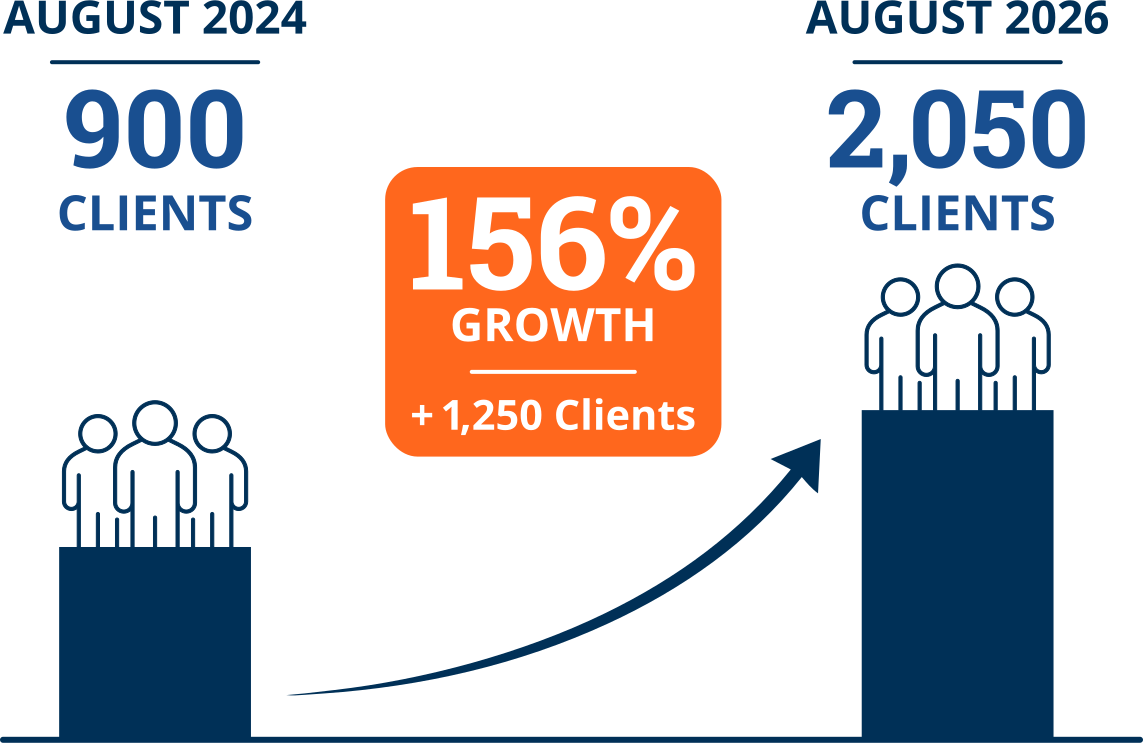
But revenue isn't how he measures success. We're going to talk to him about what the main metric of success is, and how his wife's cookies — yes, home-baked cookies — are an integral part of that success. They are adding 450 to 500 new clients a year and 30 to 60 referrals every single month. So we know that agents will want to stick around to hear how you hit those numbers, Ron, especially how you've been so successful with referrals.
But first, I want to hear a little bit about how you got started in the business. I've been told you started as an insurance agent in 2000 and were with New York Life for 16 years, right? And what led you to become an independent agent in 2016 and start your own agency?
Moving From Captive to Independent Agent
Ron: Well, it took me about five years to work my way out, but I knew I could see the writing on the wall. If I wanted to be successful in New York Life, I needed to become an asset manager. And I didn't want to do that. I did not enjoy the investment side, although I had my securities license and pretty much made my living on life insurance and variable universal life (UL) policies and variable annuity policies, and especially the variable annuities. And things changed when interest rates tanked, we didn't have the safe harbor within that product anymore, and the benefits of a variable universal life policy diminished. And I could see I needed to make a change. I enjoyed the protection side. I did not enjoy the investment side of the business. So I started working my way out of New York Life.
Brock: And your wife, Gena, is your office manager. Remind me how many other employees and agents you have in your office.
Ron: Well, I love retired teachers. My wife's a former teacher and keeps me organized and everything. So she's the office manager. Then I have Shayna. She's our front office manager. She's fantastic. She's a retired teacher. I tell her one time, and she's got it. And we've given her the title of front office manager because receptionist and secretary, absolutely not — she's a lot more than that. And so is Crystal. Crystal is our customer service and customer relations person. They're cross-trained on each way. She's fantastic, another retired teacher. I love hiring these people. And then we hired Sheila last year. Sheila is my part-time agent. It helps take the workload off of me because I don't want to work until 7 or 8 o'clock every night.
The demand of clients coming in is more demand on my time than I can do by myself without working every waking hour. And so we wanted Sheila to come in, and she's also starting to build her a new book of business. She started to do seminars, and it's just been fantastic. So we have five employees now, and I've got three downline agents — 1099 downline agents — that I helped train and do training meetings with.
But that's not part of our future. We're not going to build a network of 1099 agents. We're going to work on what we have here in Weatherford and Parker County.
Why Senior Market Sales?
Brock: And what led you to SMS, you know, what were you looking for in a new IMO?
Ron: Well, it was between Senior Market Sales and The Brokerage, two very fine agencies. The previous FMO that I was with was, kind of a local guy, he was really good at getting butts in the seats at seminars, and that's what I needed at the time. But we did not see eye to eye. I do some Advantage plans, yes, but we're mainly Supp writers. And he didn't like that. We didn't see eye to eye there.
And I was also fourth in the chain, and I needed more technology support and more support to go the health and wealth model. And so The Brokerage, all they did was Medicare. And Senior Market Sales, they're fantastic. They talked to me about the health to wealth strategy, including in annuities, which I had a tremendous amount of experience with New York Life.
And that was the real reason why I started out with them. It was absolutely fantastic. We went to Sales Forum. We were very, very impressed. Of all the things that I've been to in New York Life, you know, Sales Forum was just as good or better as far as information goes. And they sold me there. And the people are the real reason why we moved to Senior Market Sales.
You know, our frontline people here are Kelly Simonson, of course of Medicare, Brandon Aldy with annuities, and Sherilyn Lessley in life insurance. And also starting Debra Bachman with long term care — we're just starting that relationship. But we are doing more and more and more. And they offered us support. The people are fantastic, great to work with. And so that's why we made the move to SMS.
Growing During Industry Disruption
Brock: You just so happened to join SMS during one of the most disruptive times in the Medicare industry's history, when you know, you faced cut commissions, changing regulations, other pressures. And I know that agents who are listening to this will want to know — you've been able to grow very well during those two years, so how have you been able to grow in two of the most disruptive years?
Ron: We kept doing the same thing, and also we kept investing. To be successful, you have to do what other people don't want to do. And that means also in the down times you spend more money and you get more aggressive with marketing. And you do not slow down. You speed up. And so I think that's what happened. During the first year of Covid, we increased in revenue and only lost 8% of the total number of people that we wrote applications on.
And so I thought that was a pretty good success. But we kept doing what we've been doing. At that time, we brought in a receptionist to help Gena out. And then not too long later, we brought in 1099 agents that helped with Dean and Monty in Alton to help out with testing that market out.
And so we just didn't slow down. We just kept doing what we've been doing.
Brock: Yeah. You know, it's not a cliche, but it's something you hear all the time that if you do things the right way and you keep doing them, you'll see the results. And it seems to line up with how you guys have been able to grow. And that growth at SMS has been truly remarkable. Doubling your revenue in three years is insane. But I do want to point out, I want you to talk about that every conversation we've had with you, that that's not how you measure success. You've said it's more about how many people you help. And by that measure, you're also knocking it out of the ballpark. When you came to SMS, you had 800 clients. Today you have 2,050. So tell us why that's how you measure success. And how does that philosophy fuel your growth, both in the number of your clients and in revenue?
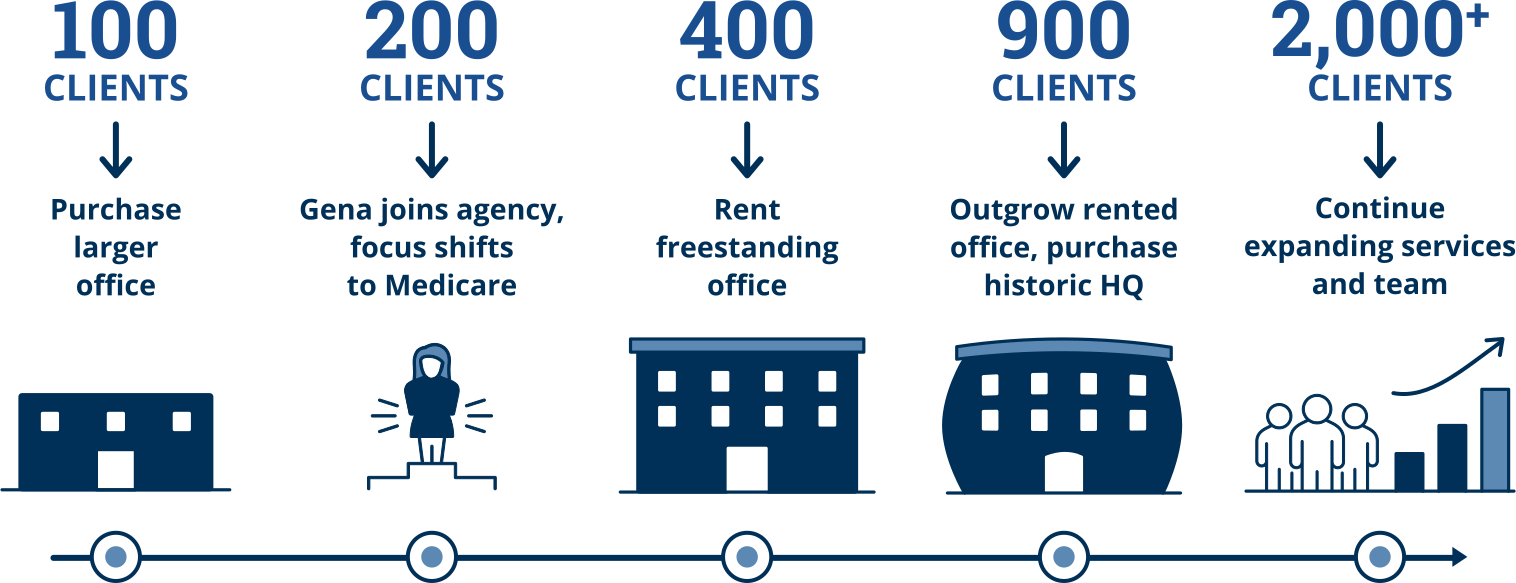
Ron: Well, I always base my long-range business plan, not on the dollar amount, but the number of clients that I have. So, you know, in 2014, that's when I really got serious about leaving New York Life. And so I moved my office from downtown Fort Worth to Weatherford. And it was a one-room office, and it was upstairs in a business office building. But it was a very, very small room, about half the size of the one I'm in now. And when I reached 100 clients, I expanded. I moved downstairs with two offices that are both of them are still smaller than the one I'm in now. But then my wife came on as part-time office manager and kind of helped me get organized. When I reached 200 clients, you know, I was analyzing my business, and what I realized was I was doing life insurance, long-term care, I was doing annuities. But, you know, I had fewer, in 2016, I actually had a smaller amount of income coming in from Medicare. But that was where I was getting the most referrals. And that was also where I realized that the community needed an expert in Medicare. And I'm not supposed to call myself an expert, and neither are you guys, but that's what we need to become.
And so they were being deceived by dishonest salespeople. And it just that was the biggest thing in the community. So in 2016, the wife came on, I said, hey, we're going to focus on Medicare. And that's when we started doing the Medicare seminars and really making that the primary business. In 2019, we had 400 clients. We rented a freestanding house, 800 square feet, off of Main Street in Weatherford, and it worked out great.
And then when we got over 1,000 clients, in fact, we got about 1,600 clients, we had five people working out at 800 square feet. And that wasn't a lot of fun. One of my 1099 agents, Monty, was still working in our building. And so 2024, we bought this house. It's a historic house, built in 1867, 2,400 square feet. It's got a lot of neat history in this house that involves a couple of Indian chiefs. We were on the edge of the frontier then. And so we bought this house, and now we have room to expand, hold seminars right here in the office. And so we just keep on growing. We hope that this office space will hold us for at least another five to 10 years.
Ron Hunn Expanded His Staff and Office Space Strategically as His Medicare Client Base Grew, Rather Than Hiring Ahead of Demand
Brock: I want to get to, you know, what types of marketing do you do. You know, we've talked a little bit about how your community-based agency and you do a lot of grassroots marketing. But what I think is most interesting is I hear that you're famous for an annual delivery of your wife's home-baked cookies to people who refer clients to you — so doctors' offices, pharmacies, financial planners, who else? And how many cookies does that end up being every year? Is that something where it's like a whole week where she's baking or can you knock ‘em out in a day?
Ron: Pretty much, yeah. 35 to 50 dozen cookies. You know, one year she asked me "how many cookies do you want me to bake?" I said, "well, how about 50 dozen?" And she looked at me, 'what, are you crazy?" "Honey, that's only 726 cookies." And I thought I was sleeping on the couch that night. But anyway, yes, we deliver them every year, and I walk in the door to a doctor's office, chiropractor's office, pharmaceutical company, our pharmacy, and of course, of doctor's offices and also financial planners.
And I walk in and say, "hey, this is me, I'm Ron Hunn, this is what we do." And they love it. And so I don't hide the fact that we're in a business for referrals. In fact, we are not in the business to write applications. We are in the business to get referrals.
And when we get a lot of referrals, then the applications will follow. But yes, we use that every single year. After spring break, we deliver those, just as we developed a relationship with the doctors. And you would not believe, especially during the Medicare Advantage Open Enrollment Period, we get a ton, a ton of referrals from doctors' offices because, guess what — they answer the phone. What happened is they got put on a plan that now their current doctor doesn't take it. And so they send them to us to fix it. And so that's where the majority of our Medicare Advantage plan sales come from. You want to hear about some other things?
Brock: Absolutely, absolutely I do.
Build a Medicare Marketing Referral System
Ron: All right. Seminars. We do mailings every year. And we dabbled into social media marketing as well to get attendance to our seminars. Every month we do seminars. We do two a month, usually one here in the office on the smaller scale and the other one at a popular restaurant in town. We continue to do those every single month to help grow the business.
And then we also do the Coyote radio station. This is our local radio station. We have a lot of fun with that. We sponsor that local radio station, and people come in all the time, saying "I heard you on the radio" — all the time. That's great. So we enjoy that.
We also do sponsorships of pickleball. I love pickleball, it's the only thing the fat old guy can play and be fairly decent. Sponsored courts and the local pickleball facilities. We sponsored the tournaments, we do that kind of thing.
Make yourself visible in the community.
We're active in Rotary Club. I'm active in Alliance Club. My wife is chairman of the ambassadors of the Chamber of Commerce. So we are very, very involved in the community as well. We are entrenched in this community.
And lastly, I'll tell you what, it's all about referrals. So we help people that we know we're never going to do business with. People on Tricare who are retired military — they got Tricare, they don't need anything else. We help them set up for Medicare A and B. People who work for the county work for the state — we can't beat those plans, but we help them anyway.
And then they come back and say, "hey, what do I owe you?" And I give them three business cards and say "three referrals, please." And they go, "of course we can do that."
Also, when someone comes in the office to for you to review their plan and you can look and see that they honestly have exactly what they need, you push it back to them and say, "you know, I can't do anything better than what you've already done."
And they go, "that's awesome, thank you. What do we owe you?" Again, I give three business cards and say "three referrals, please."
And usually I get a lot more than that. We are consistently getting between 30 and 60 referrals every single month. When someone calls into the front desk, when the first things the receptionist does is ask "how did you find out about us?"
And they note that, and then they put all that on the spreadsheet so I can take a look at all the new client call-ins, new prospect call-ins, and see every single month how many we have and where they came from. And so it's pretty cool.
Brock: And do you also have a guide for doctors for what they need to know about Medicare? Can you talk a little bit about that when you're going into doctor's offices?
Ron: We have a need-to-know flier that on the front says these are just some common things about Plan N and Plan G. And there's some basic things. I'll also let them know about the enrollment periods — when can they change their Medicare Advantage plans? When do they have guaranteed issue in the state of Texas for a Medicare Supplement plan?
We have all this right here. These are the most common things that we talk to the doctor's offices about. And on the back we have a picture of our staff and our contact information and all that. When we go to the doctor's offices, there's, along with some business cards, we also have these postcards. And I see these postcards come into our office all the time.
And if they bring in one of these cards, I know they've been to one of the places that we give cookies to, because it's my wife and I's picture on there. By the way, if you have a husband and wife or a man and a lady photo on your promotional pieces, you get a better response. We learned that the hard way. And then QR code right there so they can go to our website.
We also have a flier — don't have it with me — but we have a flier talking about our seminars. We give that to the doctor's offices as well. And on that is a QR code that takes us to our page on our website that has all of our scheduled workshops, including Medicare, of course, dental and annuities. And we're about to start long-term care. So those are the areas of interest. It's been working out well.

How to Get Started With Educational Seminars
Expanding Beyond Medicare
Brock: Yeah. And you just mentioned dental. And I want to just go into your expanded offerings just a little bit because you just started doing dental workshops. So talk a little bit about the decision to start doing those. And have you always offered dental or is this a decision to expand your offerings?
Ron: Well, we hired Sheila. Sheila is really good at ancillaries and supplemental products. I'm terrible, honest and truly I am horrible at indemnity plans, the supplemental ancillary plans. I'm horrible at them. I'm really bad at dental plans. She's really good at it. And so she has become a dental expert. The seminars we filled up every one of them. Pretty much everyone we've done, we filled up. And we do up to eight people in this room. And that's where we do our seminars.
But you got to be honest with people. Our philosophy with dental insurance, it doesn't work well for everyone. Your dentist must be contracted within that PPO network for you to get the most benefit out of your dental plan. And that's what we communicate to them. Honest and truly, we get a lot of dental sales because we're honest with people. We tell them when it will benefit them and when it won't benefit them. And the whole seminar is there. Sheila put it together. She does great with it.
Brock: And then for LTC, you've said a couple times that you're just starting with LTC. So why did you decide to start with long-term care?
Ron: Long-term care has been an interest of our clients for a long time, and I really just haven't had the time to get into the ancillaries until I hired Sheila to take some load off of me. It gave me more time to develop the cross-marketing sales. And so long-term care is an area that I've been wanting to do seminars on for a while, but just didn't have the time or resources to do it. Now that we've invested more in our business and we have Sheila on board now, I can do so.
Brock: And, how has expanding beyond Medicare contributed to your growth overall in your projections to hit $1 million next year?
Ron: Well, the big thing is we lost the revenue from prescription drug plans, which hit us about 60 grand a year. You know, that's not chump change. So we needed to make it up somewhere. And, you know, it has hurt us as it has every other agency. But, you know, we are depending on these ancillaries to really boost our sales.
And we just watched a video on ancillary sales that's on the Senior Market Sales website. And we're kind of following up with what's been successful for this agency that's doing that little seminar talk.
How Medicare Agents Can Offset Lost Commissions With Ancillary Cross-Selling
And that's what the Plan G high- deductible with ancillary indemnity plans and a combo package, I really believe that's going to be the future of Medicare Supplement plant, especially if you're in a birthday state.
We are not in a birthday state — hallelujah. But, that package right there makes a whole lot of sense. And so that's where you have a combo package with hospital indemnity, cancer and heart attack, and then, short-term care, you know, 365 days of nursing home care. That's putting that all in one package and taking care of it — that works.
We're also a full-service agency. What that means is, is when we can, we help the people sign up for Medicare A and B through the whole process. And also whenever we have our clients have a claim on an ancillary indemnity plan, then we ask him to please bring the receipts to us, and we contact the hospital or the doctor's office to get through that we know that they need. And we actually helped them file the claim to the indemnity company. We file it from our office, and usually the clients, since it's done right, get the check within two to three weeks.
What does that do? It increases referrals. And also second, whenever we can honestly go to people and say, hey, in September we helped so many of our clients receive over $2,000 of cash benefits — you know, that's marketing as well.
Advice for Medicare Agents
Brock: And what advice do you have for agents who say, "oh, I'm not good at referrals or I find it hard to ask for referrals or I don't know where to look." What's your advice for them?
Ron: Get over it. Basically, get over it.
"Become the Medicare resource that your community needs."
Bottom line. Become educated. Understand. Help your clients through claims issues. Help your clients through grievance processes. Believe it or not, I have filed grievances on myself. I've gotten the client on the phone with Medicare or with the carrier says, listen, we are we are calling to file a grievance and it's a grievance on me because I made an honest mistake. I have done that.
And in the process, when you become a full-service agent and you learn all the ins and outs, then you become an extremely valuable resource in your community for Medicare. It is desperately needed. You don't need to be a salesperson. If you think of yourself as a salesperson, so will everyone else. If you think of yourself as a valuable resource to your community, that's whenever your business grows because everyone else will see it as well. It may take a while, but everyone else will see it as well.
Brock: And then this is my second and last question. I feel like I could talk to you for hours here, but do you believe that the same grassroots marketing approach could work in bigger markets, where you don't run into clients and others in the grocery store, the community that isn't quite as tight-knit as your community. Can these same strategies be applied in bigger markets?
Ron: I don't see why not. It should. You need to create your subset. You need to get your doctor network that you're going to work. See which ones are giving you referrals. When they give you referrals, then you really pile it on to them — you do whatever you need to do, cookies or whatever it is.
You need to be a resource for their patients and their clients. And especially with financial planners. That is so important. Financial planners are looking for someone that's going to tell the truth to their clients. I had a client in just the other day. They came in and they told me their situation, and I said, "you know, there's not a single thing I can do."
Basically, they needed to stay right where they are. I know it costs a lot of money. It was a COBRA situation. And I said, "but I do not have a better answer." And I told them, "I will always tell you the truth, even whenever I can't help you." And the client said, "you know, that's what my financial planner told me you would say."
And so that felt good to me, that that financial planner has enough faith in me to send someone because they know I'm always going to tell them the truth and probably won't get a sale until they're ready to go on Medicare, which is going to be years from now. But I'll get that client on Medicare because I told the truth.
Brock: Wonderful. That's a great story. I think it's a great place to kind of send us off from. I want to thank you for sharing your success story with us. And I want to ask ... any parting words or advice for other agents who are looking to succeed the way that you have.
Ron: First three years, you're going to work your tail off. You really will. You got to work so hard. After three years, it starts getting a little easier, but you've got to view yourself as a community resource and not as a salesperson. Because if you see yourself as a salesperson, then so will everybody else. And you've got to be viewed as a Medicare expert, even though you can't use that word, you got to be viewed as that by your community and as a resource for people to turn to.
Then your business will soar. But it takes a while to get there, and you got to work through the tough times.
Brock: Wonderful, Ron Hunn, everybody, again, thank you so much and for everyone listening, we will see you next time.
Key Takeaways
- Build referral relationships with physicians, pharmacists and financial planners.
- Host educational seminars consistently.
- Measure success by clients served — not just revenue.
- Invest in marketing during challenging markets.
- Expand into ancillary products to diversify revenue.
Medicare Supplement insurance plans are not connected with or endorsed by the U.S. government or the federal Medicare program.
Share this blog post: