Log In


The One Big Beautiful Bill Act (OBBBA) has passed. What does that mean for you as an insurance agent or financial professional? Also, what does it mean for your clients? OBBBA could extend or reshape several provisions from the 2017 Tax Cuts and Jobs Act and that means you have a timely opportunity to help clients rethink how their retirement income is taxed.
At the 2025 Senior Market Sales® (SMS) Sales Forum, Senior Marketing Consultant, Ben Braverman, and Internal Marketing Consultant, Curtis Lueckenotto, explained how proactive advisors can turn today’s policy uncertainty into a planning advantage through Roth conversions and annuity strategies. Their session reveals how you can help clients plan through tax change, instead of around it.
Why It Matters Now
OBBBA, which passed on July 4, 2025, could adjust tax brackets, deductions and income thresholds. Consequently, savvy clients ask: Should I pay taxes now while rates are still low?
The great thing about that question is it gives you, the insurance agent, an opportunity to answer that question through a discussion about Roth IRA conversions. What is a Roth IRA conversion? Quite simply, it’s a strategy that allows clients to pay controlled taxes now in exchange for tax-free income later.
Introducing the two Roth clocks, a clarification on the Five-Year Rule:
- The Five-Year Clock – applies to conversions before age 59½ and determines when funds can be accessed penalty-free.
- The Forever Clock – starts once the first Roth dollar is invested. After age 59½, future conversions don’t restart the clock.
When does the five-year clock start, and does the clock help justify Roth conversions today?
Encouraging clients to begin even a small conversion early, such as $1 at age 55, starts their forever clock and sets up future tax-free growth.
 Not Doing Roth Conversions?
Learn how to get started.
Visualizing the Tax Trade-Off
Through Stonewood Financial’s Qualified Account Tax Analysis Tool, advisors can show clients the difference between lifetime taxes on a pretax IRA, and a one-time Roth conversion. For example, a $250,000 traditional IRA could cost as much as $225,000 in taxes over time versus only about $55,000 when converting once – reframing Roth conversions as voluntary, strategic taxes.*
Annuities Amplify the Strategy
With today’s higher interest rates, annuities can enhance Roth conversions through bonuses and guarantees that offset tax costs, thus offering ways to turn qualified assets into tax-free income, growth and legacy. Top carriers who offer annuities with these features include Nationwide®, North American® and Athene®.
SMS offers an entire portfolio of competitive carriers who offer bonus annuities that are suitable for Roth conversion scenarios. Plus, SMS helps insurance agents and advisors educate clients, visualize tax opportunities and build tax-efficient retirement plans. If you are interested in partnering with SMS, reach out at 1.877.645.4939 and speak with a licensed marketing consultant.
Exclusive Bonus Material
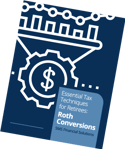
If you’re serious about showing your unique value to clients with tax techniques that transition money from a traditional retirement account into a Roth IRA, then request Essential Tax Techniques for Retirees, a complimentary eBook exclusively from SMS. This eBook highlights everything you need to know about when to consider Roth conversions and how they can make a significant difference when it comes to your clients' retirement strategies.
*Contact an SMS Financial Solutions marketing consultant at 1.877.645.4939 to view tax analysis details referenced in this blog post or to gain access to Stonewood Financial’s Qualified Account Tax Analysis Tool.
Share this blog post: